


The pump industry relies on expertise from a large and varied range of specialists, from experts in particular pump types to those with an intimate understanding of pump reliability; and from researchers who delve into the particulars of pump curves to experts in pump efficiency. To draw upon the wealth of expert knowledge the Australian pump industry has to offer, Pump Industry has established a panel of experts to answer all your pumping questions.
This edition of Ask an Expert will look at which mechanical seal maintenance options can successfully reduce maintenance costs.
Modern maintenance programs are decisive for the successful operation of industrial plants and installations. They provide economical and financial benefits to the operator and save precious resources, for a more sustainable lifetime operation of the equipment.
Sometimes it is small things like seals that have a big effect.
Q: What role do seals play in maintenance costs?
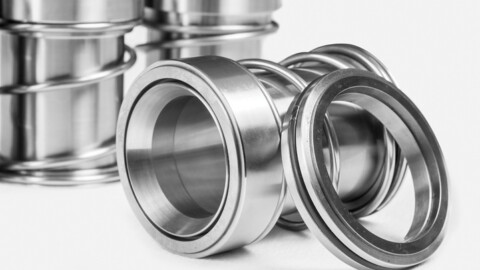
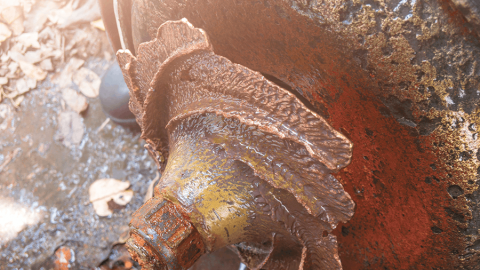
A: Seals must meet high requirements, they need to be robust, safe, ecologically sound and highly resistant to pressure and vacuum. For example, if sludge and sand are present within the process medium, seals are subject to higher wear and must be changed more frequently to ensure smooth operation. This maintenance can significantly increase costs.
Q: Which seals are predominantly used in the wastewater industry?
A: Depending on requirements of the media and operating conditions such as pressure or temperature and the characteristics of the medium to be sealed, the selection is adapted. Gland packing or mechanical seals are mainly used. Gland packing typically has a lower initial cost, but also requires more regular maintenance. Mechanical seals, on the other hand, do not require much maintenance, but when damaged they may require complete replacement.
Traditionally, when mechanical seals need replacing, the pipe work and pump suction casing require removal to gain access to the drive-side joint and mechanical seal. This is a time consuming process.

Cutaway view of an “MIP” (maintain in place) progressive cavity pump with Smart Seal Housing.
Q. Is there any way to reduce mechanical seal maintenance costs?
A: At least one innovative progressive cavity pump manufacturer has developed a split seal housing made of two parts: essentially a “Smart Seal Housing” (SSH). This Smart Seal Housing is available as an option for a popular range of “maintain in place” pumps and can also be retrofitted to selected existing pumps. It allows the seal to be completely replaced without complex dismantling and without damaging the mechanical seal faces. This means that maintenance work is reduced to a few minutes and results in significantly shorter downtime.
Benefits of Smart Seal Housing at a glance
- Sectioned seal casing – quick maintenance and easy replacement of the mechanical seal
- Easy access to the drive-side joint
- No damage to the mechanical seal during drive-side work
- No dismantling of suction casing and piping necessary
- Removal of casing cover with stationary seal face is possible – suitable for standard mechanical seals
- Many of the benefits associated with cartridge seal design, without the added cost
- Reduced maintenance times and costs – patent pending

Smart Seal Housing enables complete replacement of the stationary seal without needing to dismantle further components.
About the author
 Peter Vila, Managing Director of SEEPEX Australia, is a progressive cavity pump expert. He has been involved with pumps for over 40 years. Peter spent the first five years repairing pumps and the following 35 years in technical sales, 20 of which have been with SEEPEX progressive cavity pumps.
For more information on progressive cavity pumps, please contact SEEPEX Australia on (02) 4355 4500 or at [email protected].